Showing posts with label sri lanka. Show all posts

Thursday, November 7, 2013

காமன்வெல்த்தில் இலங்கையைக் காப்பாற்றும் முயற்சி 2011 இல் ஆரம்பித்தது.


2011 ஆம் ஆண்டு காமன்வெல்த் மாநாடு முடிந்தபின் செய்தியாளர்களை சந்தித்த காமன்வெல்த் அமைப்பின் செயலாளர் திரு கமலேஷ் சர்மாவும் ஆஸ்திரேலியப் பிரதமர் திருமதி ஜூலியா கில்லார்ட் அவர்களும் காமன்வெல்த் மாநாட்டின் தீர்மானங்களை எடுத்துக்கூறிய பின் செய்தியாளர்களின் கேள்விகளுக்குப் பதிலளித்தனர். அப்போது அவர்களிடம் ஆறு கேள்விகள் கேட்கப்பட்டன. அவற்றுள் இரண்டு கேள்விகள் இலங்கையைப் பற்றியதாக இருந்தன. 

காமன்வெல்த் மாநாட்டில் மலேசியாவின் முன்னாள் பிரதமர் அப்துல்லா அஹமது பாதவி அவர்கள் தலைமையில் பத்து பேரை உறுப்பினராகக் கொண்ட சான்றோர் குழு 206 பக்கங்கள் கொண்ட A Commonwealth of the People – Time for Urgent Reform என்ற அறிக்கையை சமர்ப்பித்தது. அதில் 106 பரிந்துரைகள் இடம்பெற்றிருந்தன. காமன்வெல்த் நாடுகளுக்கென ஒரு மனித உரிமைகள் ஆணையர் நியமிக்கப்படவேண்டும் என்ற முக்கியமானதொரு பரிந்துரையை அந்த அறிக்கை முன்வைத்திருந்தது. ஆனால் அந்த மாநாட்டில் அந்தப் பரிந்துரையை பரிசீலனைக்கு எடுத்துக்கொள்ளவில்லை. அதுபற்றி கேள்வி எழுப்பிய பத்திரிகையாளர்கள் இலங்கையைக் காப்பாற்றும் நோக்கில்தான் அந்தப் பரிந்துரையைப் பரிசீலிக்கவில்லையா என்று கேட்டனர். அதற்கு ஆஸ்திரேலியப் பிரதமர் மழுப்பலான பதிலைத்தான் முன்வைத்தார். காமன்வெல்த் செயலாலர் கமலேஷ் சர்மாவோ அதைப்பற்றி வாயே திறக்கவில்லை. 

அந்த கேள்விகளும் பதில்களும் இவைதான்:  

Reporter: Miss Prime Minister, correct me if I'm wrong, but Sri Lanka faced a lot of static as the next host about the Sri Lanka's human rights record, etc. On the subject of the Human Rights Commission, correct me if I'm wrong, but was this [all] because of the majority of the membership which backs Sri Lanka felt that this was an unfair witch hunt coming at this time, coinciding with this moment in time where Sri Lanka has got so much static, that this Human Rights Commission is being mooted now? It has been rejected in a sense, because it wasn't approved at this CHOGM. Is this because a majority of the membership felt that this was unfair to Sri Lanka?

Julia Gillard: I think you are drawing a connection between two questions when, in the deliberations of leaders, that connection was not there. To go back in time, the Eminent Persons Group was created by the last Commonwealth Heads of Government meeting to provide a report and recommendations on strengthening the Commonwealth. That is what is because leaders and we are dealing with it, and we've dealt with the charter today and we've dealt with the proposition about a commissioner too, so those things have been dealt with.

In terms of leaders' motivations for making decisions in this area, I think you would be wrong to suggest you can guess what leaders' motivations were. I think you're trying to draw a link there in your mind, which I don't think you can assume was there in the minds of leaders. Leaders have been talking about the appropriate way of strengthening the Commonwealth and that is what has driven the conclusions that we've announced here this evening.
-------------------
Reporter: Just in terms of the suggestion of appointing a human rights commissioner to improve the Commonwealth's record on addressing human rights abuses within the Commonwealth, are you concerned that key amongst the very few countries which actively opposed and therefore blocked the creation of a human rights commissioner was Sri Lanka? This is a country which itself would very much expect to be one of the first topics to be discussed by such a human rights commissioner, because of course the government there is itself accused of severe human rights abuses, crimes against humanity and war crimes, the fact that the country which perhaps focuses the need for a human rights commissioner is the country which was itself able to block that?

Julia Gillard: Well, can I say the following. First, in accordance with the conventions of the Commonwealth, there is not reporting out from the leaders' retreat session about the position of individual leaders, so I'm not going to breach that convention by reporting out of the discussions held by leaders today.
What I can say is the report we received from foreign ministers when were in executive session yesterday did indicate to us that there had been a broad range of concerns raised about the commissioner position and that range of concerns was reported to us by foreign ministers after they had had their discussions. Consequently, when leaders met today, they were aware that concerns had been raised from across a broad range of countries and had to work their way through as to what to do in those circumstances. And what I've announced to you is what leaders have determined.

On the question of Sri Lanka, I've been asked this question over the last few days and let me state Australia's position again here. We are concerned about reports of human rights abuses during the end stages of the conflict in Sri Lanka. We are aware that Sri Lanka has underway its Lessons Learnt and Reconciliation Commission process. We've been very clear that that process has to address the material that was comprehended in the UN Secretary-General's Advisory Panel report, so there is an expectation there about what should be done through the lessons learnt and reconciliation process.
I think I said yesterday and I'm very happy to say again, it seems to me to stem from the very title that if you are going to learn lessons, if you are going to achieve reconciliation, then that starts with truth telling.

Thank you very much.

Wednesday, October 16, 2013

தடுத்திடுமா தமிழகம்? - ரவிக்குமார்

dn


10.10.2013

இந்தியா காமன்வெல்த் மாநாட்டில் பங்கேற்கக்கூடாது, காமன்வெல்த் அமைப்பிலிருந்து இலங்கையை இடைநீக்கம் செய்யவேண்டும் போன்ற ஒன்பது கோரிக்கைகளை வலியுறுத்தி காலவரம்பற்ற பட்டினிப் போராட்டத்தை மேற்கொண்டிருக்கும் தோழர் தியாகுவின் கோரிக்கைகளை தி.மு.க, விடுதலைச் சிறுத்தைகள், மதிமுக உள்ளிட்ட அரசியல் கட்சிகள் ஆதரித்துள்ளன. மேலும் பல தமிழ் அமைப்புகள் இதே கோரிக்கைகளை முன்வைத்து வருகின்றன.
காங்கிரஸ் தலைமையிலான மத்திய அரசு, இந்த கோரிக்கைகளுக்கு மதிப்பளிக்கும் என்று தோன்றவில்லை. இந்திய அரசின் இலங்கைக் கொள்கையை ஆதரிப்பவர்கள், இலங்கையை நாம் ஆதரிக்காவிட்டால் அங்கே சீனாவின் பிடி அதிகரித்துவிடும், அது நமது பாதுகாப்புக்கு ஆபத்தாக அமைந்துவிடும் என சாக்கு போக்குகள் சொன்னாலும் இலங்கையில் நடைபெற்ற இனப்படுகொலைகளில் தங்களுக்கிருக்கும் பங்கை ராஜபக்ச வெளிப்படுத்தி விடுவாரோ என்ற அச்சமே இந்திய ஆட்சியாளர்களின் இலங்கைத் தொடர்பான நிலைப்பாட்டைத் தீர்மானிக்கிறது என்பதே தமிழ்நாட்டு மக்களின் என்ணமாக இருக்கிறது.
இந்திய அரசு இலங்கைக்கு ஆதரவான தனது நிலைப்பாட்டையும் மீறி, கடந்த இரண்டு முறை ஐநா மனித உரிமைக் கவுன்சிலில் இலங்கைக்கு எதிரான தீர்மானங்களை ஆதரித்ததற்குக் காரணம், தமிழ்நாடு கொடுத்த அழுத்தம்தான். இங்கிருக்கும் அரசியல் கட்சிகள் யாவும் ஒரே குரலில் வலியுறுத்தியதால்தான் இந்திய அரசு தனது நிலையை கடைசி நேரத்தில் மாற்றிக்கொண்டது. இப்போதும் அதேவிதமான அழுத்தம் தரப்பட்டால் இந்திய அரசின் நிலை மாறக்கூடும். ஆனால் அந்த அழுத்தத்தைத் தருவதில் மூன்று சிக்கல்கள் உள்ளன.
தமிழக அரசியல் கட்சிகள் ஈழத் தமிழர்கள் குறித்து எதிர்வினை புரிவதற்கு புலம்பெயர்ந்த தமிழர்கள் முக்கியமான காரணியாக இருந்து வந்துள்ளனர். ஐ.நா.மனித உரிமைக் கவுன்சிலில் தீர்மானங்கள் வந்தபோதெல்லாம் அவர்கள் முழுமூச்சோடு அதற்கு ஆதரவு திரட்டினர்; மாநாடுகளை நடத்தினார்கள்; இணைய தளங்களின் மூலம் பிரச்சாரத்தை மேற்கொண்டார்கள்; சர்வதேச மனித உரிமை அமைப்புகளோடு இணைந்து செயல்பட்டார்கள். ஆனால், காமன்வெல்த் மாநாடு தொடர்பாக புலம்பெயர்ந்த தமிழர்கள் அத்தகைய போராட்டங்கள் எதையும் இதுவரை முன்னெடுக்கவில்லை.
காமன்வெல்த் மாநாட்டை இலங்கையில் நடத்தக் கூடாது என கனடா, ஆஸ்திரேலியா ஆகிய நாடுகள் மேற்கொண்டிருக்கும் நிலைப்பாட்டைக்கூட தமக்குச் சாதகமாகப் பயன்படுத்தும் நிலையில் அவர்கள் இல்லை. குழுவாதப் போக்கு அவர்களை மென்மேலும் பிளவுபடுத்திக்கொண்டே இருக்கிறது.
இந்த குழுவாதமானது அரசியல் அமைப்புகளை நடத்துகிறவர்களை சிதைப்பது மட்டுமின்றி, புலம்பெயர் நாடுகளில் ஆர்வத்தோடு கருத்தியல் பிரச்சாரத்தில் ஈடுபட்டிருந்த ஈழத் தமிழ் அறிவுஜீவிகள் பலரையும் செயலிழக்க வைத்து முடக்கிப் போட்டுவிட்டது. அதுமட்டுமின்றி, தமக்கு ஆதரவு தெரிவித்த தமிழகத்தின் உணர்வுகளை அவமதிக்கும் விதமாகவும் அது வெளிப்பட்டு வருகிறது. இது முதலாவது சிக்கல்.
இலங்கை வடக்கு மாகாணத்தில் இப்போது தேர்ந்தெடுக்கப்பட்டிருக்கும் அரசாங்கம், காமன்வெல்த் மாநாடு தொடர்பாக எடுக்கவிருக்கும் நிலை என்ன என்பது தெளிவுபடவில்லை. அந்த மாகாணத்தின் முதல்வராகப் பொறுப்பேற்றிருக்கும் விக்னேஸ்வரன் காமன்வெல்த் மாநாட்டில் இந்தியா பங்கேற்க வேண்டும் என ஏற்கனவே கருத்து தெரிவித்திருக்கிறார்.
அவரும் அவர் சார்ந்திருக்கும் தமிழ் தேசியக் கூட்டமைப்பும் அப்படித்தான் பேச முடியும். இல்லாவிட்டால் அவர்களை "பிரிவினைவாதிகள்' என ராஜபக்ச அரசு சித்திரிக்கும். இவ்வாறு தந்திரோபாய ரீதியில் த.தே.கூ அரசு பேசுவதாக வைத்துக்கொண்டாலும், அவர்களது நிலைப்பாடு தமிழ்நாட்டின் மீது தாக்கத்தை ஏற்படுத்தவே செய்யும். தமிழர்களின் ஏகோபித்த ஆதரவோடு வெற்றி பெற்றிருக்கும் த.தே.கூ அரசு எடுக்கும் நிலைபாட்டுக்கு மாறாக தமிழ்நாட்டு அரசியல் கட்சிகள் பேசுவதில் சிக்கல் உள்ளது.
"த.தே.கூ ஒரு சமரசவாதக் கூட்டணி, அது தமிழர்களுக்கு எந்தவித உரிமையையும் பெற்றுத் தராது' என புலம்பெயர்ந்த தமிழர்கள் சிலர் சொல்வது போல தமிழ்நாட்டு அரசியல் கட்சிகளும் சொல்லலாம்.
"த.தே.கூ சொல்வதை நாங்கள் ஏற்கவில்லை, இந்திய அரசு பங்கேற்கக்கூடாது எனச் சொல்வதற்கு எங்களுக்கு உரிமை இருக்கிறது' என வாதிடலாம். ஆனால் அது எடுபடாது. த.தே.கூ வுக்கு ஈழத் தமிழர்கள் அளித்திருக்கும் பெருமளவிலான வாக்குகள் அந்தக் கூட்டணியைத்தான் அவர்கள் தங்களின் ஒரே பிரதிநிதியாகக் கருதுகிறார்கள் என்பதைத் தெளிவுபடுத்தி விட்டன. இந்நிலையில் த.தே.கூ அரசின் நிலைக்கு மாறாக தமிழ்நாட்டில் உள்ளவர்கள் பேசினால், அது ஈழத் தமிழர்களின் உணர்வுகளுக்கும் விருப்பத்துக்கும் மாறாக நாம் பேசுவதாகவே பொருள்படும். இந்திய அரசும் இந்த முரண்பாட்டை பயன்படுத்திக் கொள்ளப் பார்க்கும்.
இலங்கையின் வடக்கு மாகாண முதலமைச்சர் விக்னேஸ்வரன் காமன்வெல்த் மாநாட்டில் இந்தியா பங்கேற்க வேண்டும் என மீண்டும் வலியுறுத்துவாரெனில், தமிழ்நாட்டிலிருக்கும் தமிழ் தேசிய அமைப்புகளுக்கு அது நெருக்கடியாகவே அமையும். இது இரண்டாவது சிக்கல்.
பாராளுமன்றத் தேர்தல் நெருங்கிவரும் நிலையில், தமிழ்நாட்டிலிருக்கும் அரசியல் கட்சிகள் இனி எதைச் செய்தாலும் கூட்டணிக் கணக்கை மனதில் வைத்தே செய்யும். காங்கிரஸ் அல்லது பாஜக என ஏதோ ஒரு கட்சியோடு கூட்டணி வைத்தாக வேண்டிய நிர்பந்தத்தில் இருக்கும் அவர்கள், கூட்டணிக்கு குந்தகம் வராமல்தான் எதையும் பேசுவார்கள். ஈழப் பிரச்னையில் காங்கிரஸ் அம்பலப்பட்டு நிற்கிறது. காங்கிரஸ் அளவுக்கு மோசமில்லையென்றாலும் பாஜகவும் ஈழத் தமிழர்களுக்கு எதிராகவே நடந்து கொண்டது.
ஈழப் பிரச்னையிலும் தமிழக மீனவர் பிரச்னையிலும் தங்களுக்கு அக்கறை இருப்பதுபோல இப்போது பா.ஜ.க காட்டிக்கொண்டாலும், அவர்கள் ஆட்சியிலிருந்த காலத்தில் அவ்வாறு அவர்கள் நடந்துகொள்ளவில்லை. 2000 ஆவது ஆண்டு மே மாதத்தில் யாழ்ப்பாணத்தை மீட்பதற்கு "ஓயாத அலைகள்' என்ற தாக்குதலை நடத்தி சுமார் நாற்பதாயிரம் இலங்கை ராணுவவீரர்களை போராளிகள் சிறை பிடித்தனர். அந்த வெற்றியோடு தனி ஈழ அறிவிப்பைச் செய்வதற்கும் அவர்கள் திட்டமிட்டிருந்தனர். அப்போது தங்களுக்கு உதவுமாறு இலங்கை அரசு இந்தியாவிடம் கெஞ்சியது. அதை ஏற்று அவர்களைக் காப்பாற்றியது அப்போதிருந்த வாஜ்பாய் தலைமையிலான பாஜக அரசுதான். "இலங்கை ராணுவவீரர்கள் பாதுகாப்பாக வெளியேறுவதற்கு போராளிகள் அனுமதிக்கவில்லையென்றால், இந்திய கப்பல் படையை அனுப்பி அவர்களை மீட்போம்' என போராளிகளை மிரட்டியது வாஜ்பாய் அரசு.
அதுமட்டுமின்றி இலங்கைக் கடற்படை தமிழக மீனவர்களை சுட்டுக் கொன்று கொண்டிருந்த நேரத்தில் அதைத் தடுப்பதற்கு எந்த நடவடிக்கையும் எடுக்காததோடு, 1999 ஆம் ஆண்டு முதன்முதலாக இலங்கைக்கு ரோந்து கப்பல்களை வழங்கி உற்சாகப்படுத்தியதும் அதே வாஜ்பாய் அரசுதான். கடந்த ஆண்டு இந்தியப் பாராளுமன்றத்தில் இலங்கைக்கு எதிராகத் தீர்மானம் கொண்டுவரப்பட்டபோது, "இலங்கையில் நடைபெற்றது இனப்படுகொலை அல்ல' எனக் கூறி அதை நிறைவேற்றவிடாமல் தடுத்ததும் பா.ஜ.க தான்.
ஈழப் பிரச்னையைப் பேசுவது காங்கிரசுக்கும் சிக்கல், பாஜகவுக்கும் சிக்கல் என்பதால், ஈழப் பிரச்னையை ஒரு எல்லைக்குமேல் வலுவாக எழுப்புவது தேசியக் கட்சிகளோடு கூட்டணி அமைக்கும் கனவிலிருக்கும் தமிழகக் கட்சிகளுக்கு சங்கடமானதாகவே இருக்கும். இது மூன்றாவது சிக்கல்.
இவற்றையெல்லாம் கவனத்தில் கொண்டு பார்த்தால், காமன்வெல்த் மாநாட்டில் இந்தியா கலந்து கொள்ளக் கூடாது என்ற பிரச்சாரத்தை தமிழ்நாட்டிலிருக்கும் சிறிய இயக்கங்கள் மட்டும்தான் முன்னெடுக்க வாய்ப்புள்ளது.
சில மாதங்களுக்கு முன்னால், மாணவர்கள் ஈழப் பிரச்னையை முன்வைத்து தன்னெழுச்சியாகப் போராடியதுபோல இப்போது போராடுவதற்கு வாய்ப்பிருப்பதாகத் தெரியவில்லை. அந்த நேரத்தில் வெளியான பாலச்சந்திரனின் படுகொலை தொடர்பான படங்கள் மாணவர்களை எழுச்சி கொள்ள வைத்தன. தன்னெழுச்சியாக மேலெழும்பும் எந்தப் போராட்டமும், திட்டமிட்ட முறையில் வழி நடத்தப்படவில்லையெனில் தானாகவே தணிந்து போய் விடும். மாணவர் போராட்டமும் அப்படித்தான் ஆனது.
ஈழத் தமிழர்கள்மீது தமிழக அரசியல் கட்சிகள் உண்மையான அக்கறையோடுதான் இருக்கின்றனவா? இந்தத் தடைகளையெல்லாம் மீறி தமிழகம் எந்த அளவுக்கு ஒன்றிணைந்து போராடும்? அது காங்கிரசைப் பணிய வைப்பதாக இருக்குமா? காமன்வெல்த் மாநாட்டில் கலந்துகொள்ளாமல் இந்திய அரசைத் தடுக்குமா போன்ற கேள்விகளுக்கான விடைகள் இன்னும் சில நாள்களில் தெரிந்துவிடும்.

கட்டுரையாளர்: பொதுச் செயலாளர், விடுதலைச் சிறுத்தைகள் கட்சி.
Copyright © 2012, The Dinamani.com. All rights reserved.

Wednesday, September 25, 2013

நவநீதம் பிள்ளை அவர்களின் வாய்மொழி அறிக்கை


ஐநா மனித உரிமைக் கவுன்சில் ஆணையர்  நவநீதம் பிள்ளை அவர்களின் வாய்மொழி அறிக்கை மிகவும் நேர்மையாகவும் நடுநிலையோடும் உள்ளது. கறாராகத் தனது கருத்துகளை அவர் கூறியுள்ளார்.

இலங்கை மீது ஐநா மனித உரிமைக் கவுன்சிலின் தொடர்ந்த கண்காணிப்பு தேவை என வலியுறுத்தியிருக்கும் அவர், தேர்தல் ஆணையம், மனித உரிமை ஆணையம் உள்ளிட்ட சுயேச்சையான அமைப்புகளை நியமிக்கும் அரசையலமைப்புச் சட்ட கவுன்சிலைக் கலைத்து அண்மையில் ராஜபக்ச அரசாங்கம் கொண்டுவந்த 18 ஆவது அரசியல் சட்டத் திருத்தத்தைக் கைவிட்டு  மீண்டும் 17 ஆவது அரசியல் சட்டத் திருத்தத்தை உயிர்ப்பிக்கவேண்டும் எனவும்;எல்.எல்.ஆர்.சி பரிந்துரைகளை நிறைவேற்றவேண்டுமெனவும், பெண்கள் மீதான பாலியல் வன்கொடுமைகளுக்கு முற்றுப்புள்ளி வைக்கவேண்டுமெனவும்  வலியுறுத்தியிருக்கிறார்.

அண்மையில் இலங்கைக்குச் சென்றபோது முஸ்லிம்,கிறித்தவர்கள், இந்துக்கள் ஆகிய சிறுபான்மை மதத்தவர் தாக்கப்படுவது தொடர்பாக பல புகார்கள் தன்னிடம் கூறப்பட்டதாகவும் 2013 ஜனவரி முதல் ஜூலை வரையிலான காலத்தில் முஸ்லிம்கள் மீது நடத்தப்பட்ட  227 தாக்குதல்கள் குறித்த தொகுப்பு தன்னிடம் கையளிக்கப்பட்டதாகவும் அந்த விவரங்களை அரசாங்கத்துடன் தாம் பகிர்ந்துகொண்டதாகவும் குறிப்பிட்டிருக்கிறார். இதை சகித்துக்கொள்ள முடியாது, சிறுபானமை இனத்தவர்மீது தாக்குதல் நடத்திய குற்றவாளிகள் கடுமையாகத் தண்டிக்கப்படவேண்டும் எனவும் அவர்  வலியுறுத்தியுள்ளார்.

போர் முடிந்து நான்கு ஆண்டுகள் ஆகியும் வடக்கு மாகாணத்தில் ராணுவம் அதிக அளவில் நிலை கொண்டிருப்பதை ஏற்கமுடியாது எனவும் ராணுவத்தினரால் தமிழ்ப் பெண்கள் பாலியல்ரீதியான சுரண்டலுக்கும்,  வன்கொடுமைகளுக்கும் ஆளாகிவருவதாகவும் நவநீதம் பிள்ளை குறிப்பிட்டிருக்கிறார்.
வடக்கு மாகாணத்தில் புதிய ஆட்சி பொறுப்பேற்க உள்ள நிலையில் ஐநா மனித உரிமைக் கவுன்சில் கூட்டத்தில் சமர்ப்பிக்கப்பட்டிருக்கும் இந்த அறிக்கை தமிழ்த் தேசியக் கூட்டணிக்கு ஒரு சோதனையாக அமைந்திருக்கிறது. ஐ நா மன்றத்தில் ராஜபக்ச பேசியதை அது மௌனமாக ஏற்றுக்கொள்ளப்போகிறதா அல்லது நவநீதம் பிள்ளையின் குரலை வழிமொழியப்போகிறதா என்பதை அறிய உலகம் ஆவலோடு காத்திருக்கிறது.

Saturday, September 21, 2013

ததேகூவின் வெற்றி: இலங்கை அரசின்மீதான சர்வதேச அழுத்தத்தை அதிகரிக்கப் பயன்படவேண்டும்!


இலங்கையின் வடக்கு மாகாணத் தேர்தல் வெற்றியைத் தமிழர்கள் கொண்டாடுகிறார்கள். அது இயல்பானது.ஆனால் இந்த வெற்றி ராஜபக்‌ஷே அரசுக்கும் பயன் தரக்கூடியது.நியாயமான முறையில் தேர்தலை நடத்தியிருக்கிறோம் என சர்வதேசத்தின் முன் அவர்கள் சொல்லிக்கொள்ள இந்தத் தேர்தல் வாய்ப்பு ஏற்படுத்தித் தந்திருக்கிறது. பல்வேறு அச்சுறுத்தல்கள், ராணுவத்தின் மூலமான நெருக்குதல்கள் எல்லாவற்றையும் மீறித்தான் தமிழர்கள் இந்த வெற்றியைப் பெற்றிருக்கின்றனர் என்றாலும் இந்தத் தேர்தலை நடத்தியதற்காக இலங்கை அரசை சர்வதேசம் பாராட்டவே செய்யும். 

இரண்டாயிரத்துக்கும் மேற்பட்ட சர்வதேசத் தேர்தல் பார்வையாளர்கள் , ஐநா மனித உரிமை ஆணையர் நவநீதம் பிள்ளையின் பயணம், காமன்வெல்த் மாநாடு என புறக் காரணிகள் பல இந்தத் தேர்தலின் பின்னால் இருந்தாலும் இந்தத் தேர்தலில் ததேகூ பெற்றிருக்கும் வெற்றி இலங்கை அரசுக்கு எதிரான சர்வதேச அழுத்தத்தை மட்டுப்படுத்த அதற்குக் கை கொடுக்கும். 

வெற்றி பெற்றிருக்கும் தமிழ்த் தேசியக் கூட்டமைப்பு, இலங்கை அரசு குறித்து எம்மாதிரியான சித்திரத்தை சர்வதேசத்தின் முன்னால் வைக்கப் போகிறது? என்பதில்தான் இலங்கை அரசின்மீதான சர்வதேச அழுத்தம் எப்படி உருமாறும் என்பது தங்கியிருக்கிறது. அது உடனடியாக அரசாங்கத்துடன் சண்டைபிடிக்க முடியாது. ஆனால் தாங்கள் முன்வைத்த தேர்தல் வாக்குறுதிகளை அது மறந்துவிடக்கூடாது. எதற்காக இப்படியொரு மாபெரும் வெற்றியைத் தமக்கு மக்கள் தந்திருக்கிறார்கள் என்பதை அவர்கள் சிந்திக்கவேண்டும். 

தற்போது இலங்கை அரசின்மீது சர்வதேசத்தில் அதிகரித்துவரும் அழுத்தத்தைத் தமிழ் மக்களின் அரசியல் அதிகாரப் பகிர்வுத் திட்டத்துக்கு சாதகமாக ப் பயன்படுத்துவதில் ததேகூ உடனடிக் கவனம் செலுத்தவேண்டும். 

புலம்பெயர் நாடுகளில் இருக்கும் தமிழர்களின் விருப்பங்கள் இந்த வெற்றியோடு முழுதுமாக ஒத்துப் போகவில்லை. அவர்கள் இன்னும் ஆயுதப் போராட்டக் கனவிலேயே இருக்கிறார்கள். இப்போதாவது அவர்கள் தமது மக்களின் அபிலாஷைகளைப் புரிந்துகொண்டு அதற்கேற்பச் செயல்பட முன்வரவேண்டும். 
 
ததேகூ வின் செயல்பாடுகளைக் கண்காணித்து அவர்கள் சரணாகதிப் பாதைக்குச் சென்றுவிடாமல் பார்த்துக்கொள்ள வேண்டிய தேவை உள்ளது எனினும் இப்போதே அவர்களைத் தாக்கி அவர்களுக்கு மதிப்பில்லாமல் ஆக்கிவிட்டால் அது அவர்களை வாக்களித்துத் தேர்ந்தெடுத்திருக்கும் மக்களை அவமதிப்பதாகவே அர்த்தமாகும். இதைப் புலம்பெயர் நாடுகளிலுள்ள தமிழர்கள் குறிப்பாக Tamilnet இணையதளத்தை நடத்தும் நண்பர்கள் புரிந்துகொள்ளவேண்டும். இது ஆலோசனை அல்ல. வேண்டுகோள்!

Sunday, April 21, 2013

கச்சத்தீவு ஒப்பந்தமும் மீனவர் பிரச்சனையும்


               ( 2008அம ஆண்டு நான் தினமணிக்கு எழுதிய கட்டுரை )

      மீனவர்களைக் காப்பாற்றுவதற்காகத் தமிழக அரசியல் கட்சிகள் யாவும் களமிறங்கியுள்ளன.சிங்கள கடற்படையின் தாக்குதலைக் கண்டிப்பதில் போட்டிபோடும் அரசியல் தலைவர்கள் கச்சத்தீவு பிரச்சனையைப் பற்றிப் பேசவும் தவறவில்லை.ஆகஸ்டு மாதத்தில் இலங்கையில் நடக்கவிருக்கும் சார்க் மாநாட்டில் இந்தப் பிரச்சனையை மத்திய அரசு எழுப்பவேண்டும், மீண்டும் கச்சத்தீவை நாம் எடுத்துக்கொள்ளவேண்டும் என அவர்கள் வலியுறுத்துகின்றனர்.
      .1974ஆம் ஆண்டு ஜூன் மாதம் 28ஆம் தேதி அன்று இந்திய பிரதமராக இருந்த திருமதி இந்திராகாந்தியும் இலங்கை பிரதமராக இருந்த சிறீமாவோ பண்டார நாயகேவும் செய்து கொண்ட ஒப்பந்தம்தான் முதன்முதலாக வங்கக்கடலில் இந்திய&இலங்கைக் கடல் எல்லையை வரையறுத்த நடவடிக்கையாகும். அந்த ஒப்பந்தத்தின் அடிப்படையில் இந்தியாவும் இலங்கையும் தமது எல்லைக்கு உட்பட்ட பகுதிகளின் மீது முழுமையான உரிமையைப் பெற்றன. அந்த நாடுகளின் கப்பல்கள் ஒன்று மற்றொன்றின் எல்லைக்குள் சென்று வரும் உரிமை தொடர்ந்து காக்கப்படும் எனக்கூறிய அந்த ஒப்பந்தத்தின் பிரிவு ஐந்தில், ‘‘இந்திய மீனவர்களும், யாத்ரீகர்களும் கச்சத்தீவுக்கு வழக்கம்போல சென்று வரலாம். அதற்கு இலங்கையிடம் அனுமதி பெறத்தேவையில்லை’’ எனத் தெளிவாகக் கூறப்பட்டுள்ளது.
​1974க்குப் பிறகு 1976 ஆம் ஆண்டு மார்ச் மாதம் இருபத்து மூன்றாம் நாள் இலங்கையும் இந்தியாவும் அடுத்து ஒரு ஒப்பந்தத்தில் கையெழுத்திட்டன. மன்னார் வளைகுடாப் பகுதியில் கடல் எல்லையை வரையறுக்கும் ஒப்பந்தம்தான் அது. இந்தியா சார்பில் கேவல் சிங்கும், இலங்கைக்காக டபிள்யூ.டி. ஜெயசிங்கேவும் அந்த ஒப்பந்தத்தில் கையெழுத்திட்டிருந்தனர். இந்த இரண்டு ஒப்பந்தங்களிலோ இவற்றுக்குப் பிறகு அதே ஆண்டு நவம்பர் 22ஆம் தேதி கையெழுத்தான இலங்கை, இந்திய, மாலத்தீவு ஆகியவற்றுக்கிடையேயான முச்சந்தியை வரையறுக்கும் ஒப்பந்தத்திலோ கச்சத்தீவு பகுதியில் தமிழக மீனவர்கள் மீன்பிடிக்கக்கூடாது என்று சொல்லப்படவில்லை. இந்த ஒப்பந்தங்களுக்குப்பிறகு பரிமாறிக் கொள்ளப்பட்ட கடிதங்களில்தான் கச்சத்தீவை இலங்கைக்குத் தாரைவார்த்துத் தந்தார்கள் என்று கூறப்படுகிறது. ஆனால் தமிழக மீனவர்கள் கச்சத்தீவுக்குச் சென்று ஓய்வெடுக்கவும், அங்கே தமது வலைகளை உலர்த்தவும், புனித அந்தோணியார் கோயில் திருவிழாவுக்குச் செல்லவும் தொடர்ந்து உரிமை பெற்றிருந்தார்கள். 1983 ஆம் ஆண்டுவரை எந்தப் பிரச்சனையும் இல்லாமல் அவர்கள் மீன்பிடித் தொழிலைச் செய்து வந்தனர். 83ல் ஏற்பட்ட இனக்கலவரத்தைத் தொடர்ந்து கச்சத்தீவு பகுதியில் மீன்பிடிப்பதற்கு இலங்கை அரசு தடை விதித்தது. அந்தத் தடை 2003 வரை தொடர்ந்தது.
​தமிழக மீனவர்கள் சிறை பிடிக்கப்படுவதும், அவர்களது மீன்களும், வலைகளும், படகுகளும் இலங்கைக் கடற்படையால் பறிமுதல் செய்யப்படுவதும் தொடர்கதையாயின. நூற்றுக்கணக்கான தமிழக மீனவர்கள் இலங்கைக் கடற்படையால் சுட்டுக் கொல்லப்பட்டார்கள். அப்படித் தமிழக மீனவர்கள் பாதிக்கப்படும்போதெல்லாம் இந்திய அரசு இலங்கையைக் கண்டிக்கக்கூட முன்வருவதில்லை என்பது வேதனைக்குரிய செய்தியாகும். இதுவரை துப்பாக்கியால் சுட்டவர்கள் இப்போதோ கண்ணிவெடிகளை மிதக்க விட்டுவிட்டார்கள்.

      கச்சத்தீவு பகுதியில் தமிழக மீனவர்கள் எதிர்கொள்ளும் பிரச்சனைகளைத் தீர்ப்பதற்காக இந்திய&இலங்கை அரசுகள் சில நடவடிக்கைகளை எடுத்தன. ‘கூட்டு நடவடிக்கைக்குழு’ என ஒரு குழு அமைக்கப்பட்டு அதிகாரிகள் மட்டத்தில் பேச்சுவார்த்தைகளும் நடந்தன. 2006 ஆம் ஆண்டு ஜனவரி மாதத்தில் கொழும்புவில் நடந்த ‘‘கூட்டு நடவடிக்கைக் குழு’’ கூட்டத்தில் சில முடிவுகளும் எடுக்கப்பட்டன. சர்வதேச எல்லையிலிருந்து ஐந்து கடல் மைல் வரை சென்று மீன் பிடிக்கின்ற மீனவர்களைக் கைது செய்வதில்லை எனவும், இரு நாடுகளின் சிறைகளிலும் வாடிக்கொண்டிருக்கும் மீனவர்களை விடுவிப்பது எனவும் அந்த ‘கூட்டு நடவடிக்கைக் குழு’ முடிவெடுத்தது. அதற்கு மாறாக இப்போது கண்ணிவெடிகளைப் போட்டிருப்பது மேலே கண்ட கூட்டு நடவடிக்கை குழுவின் முடிவுகளை இலங்கை அரசு மதிக்கவில்லை என்பதையே எடுத்துக்காட்டுகிறது.

இலங்கைக் கடற்படைக்கு இந்தியா பயிற்சி அளிப்பதா?

 
                           இந்திய அரசுக்கு தொல். திருமாவளவன் கண்டனம்

நாள்தோறும் தமிழக மீனவர்கள் இலங்கைக் கடற்படையால் தாக்கப்படுகின்றனர். பலர் சிறைபிடிக்கப்பட்டு இலங்கைச் சிறைகளில் அடைக்கப்பட்டுள்ளனர். தமிழக மக்களும் தமிழக அரசும் எத்தனையோ போராட்டங்களை நடத்தியும்கூட இந்திய அரசு இலங்கைக் கடற்படையின் தாக்குதல்களைத் தடுத்து நிறுத்த எந்த நடவடிக்கையையும் எடுக்கவில்லை. இந்நிலையில் இலங்கைக் கடற்படையைச் சேர்ந்த 250 பேருக்கு இந்தியக் கடற்படைக் கப்பல்களில் பயிற்சி அளிக்கப்பட்டிருப்பதாக செய்தி வெளியாகியுள்ளது. 

இந்தியக் கடற்படை மற்றும் கடலோரக் காவல் படையைச் சேர்ந்த சுஜாதா, தரங்கிணி,வருணா ஆகிய மூன்று கப்பல்கள் இந்தப் பயிற்சியை அளித்துள்ளன. பயிற்சி பெற்ற சிங்களப் படையினருக்கு இந்திய தூதரகம் சார்பில் அளிக்கப்பட்ட வரவேற்பு நிகழ்ச்சியில் பேசிய இலங்கைக் கடற்படை துணைத் தளபதி ஜெயந்த் கொலம்பகே என்பவர் இலங்கைக் கடற்படையினரில் 80% பேருக்கு இந்தியாதான் பயிற்சி அளிக்கிறது என்று கூறியுள்ளார்.

 இது தமிழக மக்களைப் புண்படுத்துவதாக இருக்கிறது தமிழக மீனவர்கள்மீது நடத்தப்பட்டுவரும் தாக்குதல்கள் இந்திய அரசின் ஆதரவோடுதான் நடத்தப்படுகிறதோ என்ற ஐயத்தை நமக்கு ஏற்படுத்துகிறது. 

இலங்கை ராணுவத்தினருக்கு இந்தியா பயிற்சி அளிப்பதும் அவர்கள் இந்திய மீனவர்களையே தாக்குவதும் தொடர்கதையாகிக்கொண்டிருக்கிறது. தனது நாட்டு குடிமக்களைக் கொல்பவர்களுக்குத் தாங்களே பயிற்சி அளிக்கும் இத்தகைய கேவலம் உலகில் வேறு எங்குமே நடந்ததில்லை. இந்திய அரசு இலங்கைப் படையினருக்குப் பயிற்சி அளிப்பதை உடனடியாக நிறுத்திக்கொள்ளவேண்டும் என வலியுறுத்துகிறோம். 

இலங்கைக்கான இந்தியத் தூதராக தமிழ்நாட்டைச் சேர்ந்த ஒருவரை நியமிக்கவேண்டும் என கேட்டுக்கொள்கிறோம். 

மத்திய அரசு தொடர்ந்து தமிழக மக்களின் உணர்வுகளுக்கு எதிராக செயல்படுவதென்பது அதற்கு தேசிய ஒருமைப்பாட்டின்மீது நம்பிக்கை இல்லையோ என்ற கேள்வியைத்தான் எழுப்புகிறது. இது இந்தியாவின் எதிர்காலத்துக்கு நல்லதல்ல என்று சுட்டிக்காட்டுகிறோம்.


Thursday, March 21, 2013

இலங்கை குறித்த அமெரிக்க தீர்மானம் : இனி செய்யவேண்டியவை யாவை ?


ஐ.நா.மனித உரிமைகள் பேரவையில் இலங்கை குறித்த தீர்மானம் நிறைவேற்றப்பட்டது தொடர்பாக புதிய தலைமுறை தொலைக்காட்சியிலும், சன்  நியூஸ் தொலைக்காட்சியிலும் விவாதங்களில் கலந்துகொண்டு கருத்து தெரிவித்தேன். நான் கூறிய கருத்துகளின் சுருக்கம் :

1. அமெரிக்க தீர்மானத்தின்மீது திருத்தம் எதையும் இந்தியா கொண்டுவராது என்பது உலகளாவிய காலமுறை அறிக்கைமீது இந்தியா தெரிவித்த கருத்துகளின்மூலம் வெளிப்பட்டுவிட்டது. எனினும் நாம் இந்திய அரசை வலியுறுத்தியது அதை அம்பலப்படுத்துவதற்கே.

2.நாம் அண்டை மாநிலப் பிரச்சனைகள் பற்றி அக்கறைகாட்டாமல் இருக்கும்போது அவர்கள் நம் பிரச்சனையையும் அலட்சியப்படுத்தவே செய்வார்கள். தெலுங்கானா சிக்கல் குறித்தோ, வடகிழக்கு மாநிலங்களில் நடைபெறும் போராட்டங்கள் குறித்தோ,காஷ்மீரில் நடக்கும் மனித உரிமை மீறல்கள் குறித்தோ நாம் அக்கறைகாட்டாமல் இருப்பது தவறு. அனமைக்காலமாக நதிநீர்ப் பிரச்சனை காரணமாக நாம் அண்டை மாநிலங்களை எதிரிகளாகப் பார்க்கத் தொடங்கியிருப்பதும் சரியல்ல.

3. சர்வதேச அளவில் மனித உரிமைகளைப் பாதுகாப்பதற்கென  கொண்டுவரப்பட்ட ஐ.நா தீர்மானங்களில் இந்தியா கையெழுத்திடவில்லை. போர்க்குற்ற விசாரணை குறித்து நாம் பேசுகிறோம்.அந்த விசாரணையை நடத்தவேண்டிய சர்வதேச குற்றவியல் நீதிமன்றம் அமைக்கப்பட்டதை இன்னும் இந்தியா ஏற்கவில்லை. அதற்கு அடிப்படையாக அமைந்த ரோம் ஒப்பந்தத்தில் இந்தியா கையெழுத்திடவில்லை. அதுமட்டுமின்றி சித்திரவதைக்கு எதிரான ஒப்பந்தத்திலும், அகதிகள் குறித்த ஒப்பந்தங்களிலும் இந்தியா கையெழுத்திடவில்லை. அந்த ஒப்பந்தங்களில் கையெழுத்திடச் சொல்லி நாம் வலியுறுத்தவேண்டும்.

4.ஐ.நா மனித உரிமைப் பேரவையின் 23 ஆவது கூட்டம் செப்டம்பரில் நடக்கும்போது இப்போதைய தீர்மானத்தை நிறைவேற்றுவதி இலங்கை எடுத்திருக்கும் நடவடிக்கை குறித்து வாய்மொழி அறிக்கை தாக்கல் செய்யுமாறு ஐ.நா மனித உரிமை ஆணையரை இத் தீர்மானம்  பணித்திருக்கிறது. காமன்வெல்த் நாடுகளின் அடுத்த மாநாட்டை, தான் பிறந்த ஹம்பந்தோட்டாவில் நடத்த ராஜபக்ச ஏற்பாடு செய்து வருகிறார். இலங்கையில் அந்த மாநாட்டை நடத்தக்கூடாது என பல்வேறு நாடுகளும் குரலெழுப்பி வருகின்றன. தற்போது போராடிவரும் மாணவர்களும் போதுமக்க்களும்ம் அரசியல் கட்சிகளும் இந்த இரண்டு விஷயங்களையும் கவனத்தில்கொண்டு தமது போராட்டங்களைத் தீவிரப்படுத்தவேண்டும்.

UNHRC: Text of the US resolution on Sri Lanka

The Human Rights Council,
Reaffirming the purposes and principles contained in the Charter of the United Nations,
Guided by the Universal Declaration of Human Rights, the International Covenants on Human Rights and other relevant instruments,
Bearing in mind General Assembly resolution 60/251 of 15 March 2006,
Recalling Council resolutions 5/1 and 5/2 of 18 June 2007, on institution-building of the Human Rights Council,
Recalling Human Rights Council resolution 19/2 of 22 March 2012 on promoting reconciliation and accountability in Sri Lanka,
Reaffirming that it is the responsibility of each State to ensure the full enjoyment of all human rights and fundamental freedoms of its entire population,
Reaffirming also that States must ensure that any measure taken to combat terrorism complies with their obligations under international law, in particular international human rights law, international refugee law and international humanitarian law, as applicable,
Welcoming the announcement by the Government of Sri Lanka to hold elections to the Provincial Council in the Northern Province in September 2013,
Welcoming and acknowledging the progress made by the Government of Sri Lanka in rebuilding infrastructure, demining, resettling the majority of internally displaced persons, and noting nonetheless that considerable work lies ahead in the areas of justice, reconciliation and resumption of livelihoods, and stressing the importance of the full participation of local populations, including representatives of civil society and minorities, in these efforts,
Taking note of the report of the Lessons Learnt and Reconciliation Commission of Sri Lanka and its findings and recommendations, and acknowledging its possible contribution to the process of national reconciliation in Sri Lanka,
Taking note of the National Plan of Action to implement the recommendations of the Lessons Learnt and Reconciliation Commission of the Government of Sri Lanka and its commitments as set forth in response to the findings and recommendations of the Commission,
Noting that the national plan of action does not adequately address all of the findings and constructive recommendations of the Commission,
Recalling the constructive recommendations contained in the Commission’s report, including the need to credibly investigate widespread allegations of extrajudicial killings and enforced disappearances, demilitarize the north of Sri Lanka, implement impartial land dispute resolution mechanisms, re-evaluate detention policies, strengthen formerly independent civil institutions, reach a political settlement on the devolution of power to the provinces, promote and protect the right of freedom of expression for all and enact rule of law reforms,
Noting with concern that the National Plan of Action and the Commission’s report do not adequately address serious allegations of violations of international human rights law and international humanitarian law,
Expressing concern at the continuing reports of violations of human rights in Sri Lanka, including enforced disappearances, extrajudicial killings, torture, and violations of the rights to freedom of expression, association and peaceful assembly, as well as intimidation of and reprisals against human rights defenders, members of civil society and journalists, threats to judicial independence and the rule of law, and discrimination on the basis of religion or belief,
Calling upon the Government of Sri Lanka to fulfil its public commitments, including on the devolution of political authority, which is integral to reconciliation and the full enjoyment of human rights by all members of its population,
Expressing appreciation for the efforts of the Government of Sri Lanka in facilitating the visit of a technical mission from the Office of the United Nations High Commissioner for Human Rights, and encouraging the Government to increase its dialogue and cooperation with the Office of the High Commissioner,
Noting the High Commissioner’s call for an independent and credible international investigation into alleged violations of international human rights law and international humanitarian law,
1. Welcomes the report of the Office of the United Nations High Commissioner for Human Rights on advice and technical assistance for the Government of Sri Lanka on promoting reconciliation and accountability in Sri Lanka[1] and the recommendations and conclusions contained therein, in particular on the establishment of a truth-seeking mechanism as an integral part of a more comprehensive and inclusive approach to transitional justice;
2. Encourages the Government of Sri Lanka to implement the recommendations made in the report of the Office of the High Commissioner, and also calls upon the Government of Sri Lanka to conduct an independent and credible investigation into allegations of violations of international human rights law and international humanitarian law, as applicable;
3. Reiterates its call upon the Government of Sri Lanka to implement effectively the constructive recommendations made in the report of the Lessons Learnt and Reconciliation Commission, and to take all necessary additional steps to fulfil its relevant legal obligations and commitment to initiate credible and independent actions to ensure justice, equity and accountability, and reconciliation for all Sri Lankans;
4. Encourages the Government of Sri Lanka to cooperate with special procedures mandate holders and to respond formally to their outstanding requests, including by extending invitations and providing access;
5. Encourages the Office of the High Commissioner and relevant special procedures mandate holders to provide, in consultation with and with the concurrence of the Government of Sri Lanka, advice and technical assistance on implementing the above-mentioned steps;
6. Requests the Office of the High Commissioner, with input from relevant special procedures mandate holders, as appropriate, to present an oral updateto the Human Rights Council at its twenty-fourth session, and a comprehensive report  followed by a discussion at the twenty-fifth session, on the implementation of the present resolution
Co-sponsors of the resolution;
Austria, Canada, Croatia, Belgium, Denmark, Estonia, France, Finland, Georgia, Germany, Greece, Hungary, Iceland, Ireland, Italy, Liechtenstein, Lithuania, Malta, Monaco, Montenegro, Norway, Poland, Portugal, Romania, Slovakia, Slovenia, Spain, St Kitts and Nevis, Sweden, Switzerland, United Kingdom of Great Britain and Northern Ireland and United States of America.

UNHRC : Statements of some countries before vote

In a resolution (A/HRC/22/L.1/Rev1) on promoting reconciliation and accountability in Sri Lanka, adopted by a vote of 25 in favour, 13 against and 8 abstentions, the Council welcomes the report of the High Commissioner on promoting reconciliation and accountability in Sri Lanka; encourages the Government of Sri Lanka to implement the recommendations made in the report of the High Commissioner, and to cooperate with Special Procedures mandate holders and to respond formally to their outstanding requests, including by extending invitations and providing access. 
The Council also calls upon the Government of Sri Lanka to conduct an independent and credible investigation into allegations of violations of international human rights law and international humanitarian law, as applicable; and requests the High Commissioner to present an oral update to the Council at its twenty-fourth session, and a comprehensive report followed by a discussion at the twenty-fifth session, on the implementation of the present resolution.

The result of the vote was as follows:

In favour (26): Argentina, Austria, Benin, Brazil, Chile, Costa Rica, Côte d'Ivoire, Czech Republic, Estonia, Germany, Guatemala, Gabon,  India, Ireland, Italy, Libya, Montenegro, Peru, Poland, Republic of Korea, Republic of Moldova, Romania, Sierra Leone, Spain, Switzerland and United States.

Against (13): Congo, Ecuador, Indonesia, Kuwait, Maldives, Mauritania, Pakistan, Philippines, Qatar, Thailand, Uganda, United Arab Emirates and Venezuela.

Abstentions (8): Angola, Botswana, Burkina Faso, Ethiopia, Japan, Kazakhstan, Kenya and Malaysia.


United States, introducing resolution L.1, encouraged Sri Lanka to take the necessary steps to ensure accountability and lasting peace following almost three decades of civil war.  The resolution welcomed important progress made by Sri Lanka but also recognized that much remained to be done.  The resolution also highlighted the constructive role of the Office of the High Commissioner and of special procedures’ mandate holders in providing technical assistance and advice, and encouraged Sri Lanka to cooperate these actors. 

Pakistan, speaking in a general comment, said that the delegation of Sri Lanka had briefed several delegations bilaterally and in regional groups and had explained in detail why it found the resolution unacceptable despite several revisions.  In draft resolution 22/L.1, Pakistan observed that the parameters had been shifted with the introduction of substantive elements and this was of concern, given that Sri Lanka was being asked in effect to implement the recommendations of the Office of the High Commissioner’s report with disregard to the on-going domestic reconciliation process.  The substantive amendments proposed by Pakistan and other delegations during informal sessions, intended to bring some semblance of balance to the text, had been disregarded.  Pakistan then called for a vote on the resolution.

India,
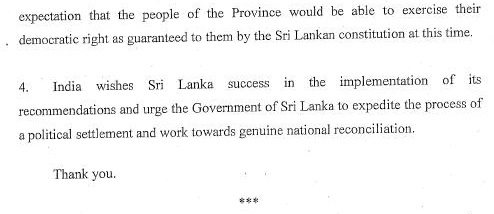
speaking in a general comment, said that the resolution on Sri Lanka provided an opportunity to forge a way forward through national and inclusive reconciliation.  India noted with concern that Sri Lanka had not kept its 2009 commitments and called on Sri Lanka to move forward on its public commitments and to take measures to ensure accountability.  India had always been of the view that the end of the conflict in Sri Lanka had presented an opportunity to achieve a lasting peace.  Sri Lanka’s elections scheduled for 2013 were an opportunity for its people to exercise their electoral right in a free environment. 

Ireland, speaking on behalf of the European Union, in a general comment, said that the European Union fully supported all efforts to promote reconciliation and accountability in Sri Lanka.  The European Union noted that the main sponsor had reached out to the country concerned and had sought to address a number of its concerns.  Genuine reconciliation was essential and required justice and accountability for past events.  The European Union urged Sri Lanka to carry out independent, credible investigations of alleged violations of international human rights and international humanitarian law.   The European Union urged the Government to cooperate with the special procedures’ mandate holders and to respond to all outstanding requests.

Montenegro, speaking in a general comment, fully aligned itself with the resolution on promoting reconciliation and accountability in Sri Lanka, which it saw as a step towards achieving lasting peace.  Montenegro welcomed the improvements made by Sri Lanka and joined with other countries in encouraging the Sri Lankan Government to take additional steps towards the promotion of justice and the implementation of real reconciliation.  Justice would be essential if there was to be true reconciliation after a long and divisive civil war in the country. 

Switzerland, speaking in a general comment, welcomed the submission of the resolution on Sri Lanka and remained concerned about the human rights situation in the country.  Switzerland underlined the importance of dialogue and cooperation for the process of achieving reconciliation and encouraged Sri Lanka to enhance its cooperation with the Office of the High Commissioner and with special procedures’ mandate holders.

Sierra Leone, speaking in a general comment, said that as a country that had witnessed a bloody and destructive 10-year civil war and from which it that had bounced back through genuine reconciliation and accountability, was compelled to support this resolution.  Sierra Leone considered it to be fair, balanced and designed to bring about accountability and reconciliation.  Sierra Leone was aware of the glaring fact that the only way to bring meaningful and sustainable reconciliation was through an end to impunity and through meaningful accountability.  This resolution did just that in a fair way.  Sierra Leone supported it and called on other States to do the same.

Brazil,
speaking in a general comment, said that it had followed with interest and concern the human rights situation in Sri Lanka and that it showed challenges and advancements since the end of the conflict in 2009.  The Sri Lankan Government had made significant progress in building infrastructure and resettling displaced persons.  Cooperation with the United Nations human rights’ mechanisms was a two-way street and Brazil encouraged the High Commissioner to act upon the invitation of the Government to visit the country.

Venezuela, speaking in a general comment, categorically rejected the selectivity and double standards which were increasingly used in the Council against the will of countries concerned, as had been the case with Sri Lanka.  The Council was turning a blind eye to the efforts that Sri Lanka was undertaking to improve the human rights situation.  Venezuela warned about the serious risks created by the interventionist approaches of certain Members of the Council and stated that would vote against the resolution.   

Ecuador, speaking in a general comment, said that it had always condemned violations of human rights anywhere in the world.  There should be no biased approach to specific countries nor should double standards be tolerated in the Council.  Sri Lanka was showing signs of political will to improve the human rights situation and, therefore, Ecuador would vote against the resolution on Sri Lanka.

Sri Lanka, speaking as the concerned country, said that the draft resolution before the Council was premised upon resolution 19/2 of 2012 which was not recognised by Sri Lanka.  Despite its dissociation with that initiative, Sri Lanka had shown clear progress towards comprehensive reconciliation including by the preparation and implementation of the action plan called for by the resolution.  The draft resolution before the Council today was unacceptable to Sri Lanka.  The present draft moved dramatically away from the ambit and scope of previous resolution 19/2 and the preambular part of the text was highly intrusive, replete with misrepresentations and, in its overall scope, accentuated the negative and eliminated or was dismissive of the positive.  The tone set for the rest of the document was overwhelmingly pessimistic.  The paragraph dealing with progress achieved ignored many areas of clear progress.  It also sought to allege continuing reports of discrimination on grounds of religion or belief when this was manifestly not the case.  Sri Lanka’s constructive engagement through the Universal Periodic Review process had unfortunately been ignored. 

The operative paragraphs of the text showed they were based on a political process.  Sri Lanka noted that the report introduced new elements such as an international inquiry, incidentally first proposed by the Council in May 2009.  The reference to the Panel of Experts’ report set the dangerous precedent of introducing unsubstantiated reports.  Sri Lanka totally rejected attempts by the Office of the High Commissioner and others to introduce elements of the Panel of Experts’ report, which attempted to legitimize its recommendations and seek to impose them on Sri Lanka.  Why this preoccupation with Sri Lanka? Why the inordinate and disproportionate attention, despite so much progress in a relatively short period of time?  Given the background and anomalous nature of the text, many countries would naturally have concerns as it could establish a bad precedent.  Stakeholders may be forewarned that if the current tendency towards politicization continued the Council may face the fate of its predecessor, the Commission on Human Rights.  Rather than singled out, Sri Lanka should be encouraged in its current process of reconciliation.

Indonesia,
speaking in an explanation of the vote before the vote, said that it could not go along with the resolution on Sri Lanka because it believed that during this difficult transitional period Sri Lanka deserved support and assistance.  Sri Lanka should be allowed to spend its energy and resources on the implementation of its National Action Plan.  The adoption of Sri Lanka’s Universal Periodic Review last week demonstrated the country’s engagement with United Nations’ mechanisms. 

Thailand, speaking in an explanation of the vote before the vote, said that it remained concerned about the draft resolution on Sri Lanka and would vote against it.  The resolution did not take into account the continuing progress which Sri Lanka was making in the implementation of recommendations.  Thailand urged Sri Lanka to continue to ensure accountability and to combat impunity, but recognized that the process would take time.

Republic of Korea, speaking in an explanation of the vote before the vote, noted with appreciation the efforts and the achievements made by Sri Lanka in rebuilding infrastructure, demining, and rehabilitating child soldiers.  Republic of Korea understood the importance of accountability for genuine reconciliation and the considerable difficulties faced in the process of ensuring it. The Republic of Korea would vote in favour of this resolution.

Japan,
speaking in an explanation of the vote before the vote, said that it attached utmost importance to the promotion of human rights and fundamental freedoms.  Japan welcomed certain progress in rebuilding infrastructure and resettlement of internally displaced persons.  However many challenges remained.  Japan encouraged Sri Lanka to make the utmost efforts to continue to cooperate with the international community.  It would abstain from the vote on the resolution.

Saturday, March 16, 2013

AA Brief of the remarks made at UPR of Sri Lanka at UNHRC Geneva

Consideration of Outcome of Universal Periodic Review of Sri Lanka

MAHINDA SAMARASINGHE, Minister of Plantation Industries and Special Envoy of the President of Sri Lanka on Human Rights, said that a year after its first Universal Periodic Review in 2008, Sri Lanka had finally achieved success in the humanitarian operation of rescuing the civilian population held by a ruthless group of terrorists. It had engaged since May 2009 in a period of consolidation, removing military involvement in civil administration, reconstruction, demining, rehabilitation and resettlement and had launched initial efforts and national reconciliation and peace-building. Sri Lanka had received a total of 204 recommendations during its second Review and had accepted 113, while 91 recommendations did not enjoy its support; Sri Lanka also made 19 voluntary commitments. Sri Lanka had accepted 12 recommendations specifically referring to the National Action Plan for the implementation of the recommendations of the Lessons Learnt and Reconciliation Commission.

Turning to the process of accountability, Sri Lanka said that the first issue to be addressed was that of the figures of the civilian victims, which had been repeated by several sources without once verifying the facts. Also, the military authorities had ongoing inquiries on civilian casualties during the humanitarian operation; a database on detainees was available to the next of kin and the investigations into cases of disappearance were ongoing though national mechanisms. The National Action Plan for the Promotion and Protection of Human Rights was a commitment that had grown from the initial Review in 2008 and Sri Lanka was currently engaged in the evaluation of the first year of its implementation; the National Plan aimed to consolidate gains and to systematically address the various human rights issues and challenges. Sri Lanka would now have to conceive of a mechanism that would take into consideration the accepted recommendations and pledges made during the second Review. Sri Lanka was confident that by its next Review in 2017 it would be able to demonstrate further progress in the promotion and protection of the human rights of its people.

Oman said that Sri Lanka had accepted most of the recommendations made, which demonstrated its willingness to cooperate with the Council and showed its determination to comply with human rights obligations.

Pakistan said that it was encouraging to see that Sri Lanka had made 19 voluntary commitments, including for the protection of the rights of women and children, the advancement of the reconciliation process, and the reintegration of ex-combatants in society.

Philippines said that Sri Lanka had shown deep commitment to the advancement of human rights. The Philippines welcomed in particular acceptance by Sri Lanka of the recommendation pertaining to the National Action Plan and the Lessons Learnt and Reconciliation Commission. Concern was expressed at the situation of migrant workers and their families, and the Philippines looked forward to the ratification by Sri Lanka of International Labour Organization Convention 189.

Russia said that Sri Lanka’s second cycle of the Universal Periodic Review had again confirmed its readiness and openness to engage in open dialogue. Sri Lanka had agreed to the majority of recommendations made and those accepted were truly constructive and non-politicised in nature. Russia appreciated Sri Lanka’s list of voluntary commitments on many aspects of human rights.

Sudan said that Sri Lanka had accepted a great number of recommendations, most of which were positive and constructive. Sudan welcomed the acceptance of two recommendations on consolidation of law enforcement and resettlement of internally displaced persons. It was important to create an environment that made it possible for citizens to enjoy their rights.

United Arab Emirates welcomed positive measures undertaken by the Government to implement the recommendations from the first cycle of the Universal Periodic Review. The United Arab Emirates took note of Sri Lanka’s statement on giving new impetus to the human rights system and promoting human rights. It was fully confident that Sri Lanka would move forward and hoped it would be supported in this.

United Kingdom expressed serious concern about freedom of expression in Sri Lanka and asked why the recommendation to invite the Special Rapporteur on freedom of expression and opinion to visit the country was rejected. Sri Lanka gave no justification for the rejection of the recommendations relating to the independence of the judiciary. The impeachment of the Chief Justice ran contrary to the clear rulings of Sri Lanka’s highest courts and contravened principles of fairness, due process and respect for the independence of the judiciary.

United States welcomed the acceptance of recommendations to combat gender-based violence and investigate breaches of international humanitarian law and international human rights law. The United States was disappointed that Sri Lanka had rejected the implementation of the recommendations of its Lessons Learnt and Reconciliation Commission and nearly all recommendations to engage with the United Nations Special Procedures mandate holders.

Venezuela welcomed the spirit of openness and cooperation that Sri Lanka had demonstrated in the second Universal Periodic Review process and urged it to implement the recommendations of its Lessons Learnt and Reconciliation Commission. Venezuela recognized the efforts of Sri Lanka to implement recommendations from its first Review, notably those relating to the improvement of the enjoyment of human rights and those related to peace.

Viet Nam said that serious efforts had been made by Sri Lanka in relation to the national reconstruction and reconciliation process, and noted with satisfaction the ongoing implementation of 19 voluntary commitments made by Sri Lanka. Nevertheless, challenges and hardships remained to be overcome, for which an environment favourable to creating a stable and peaceful Sri Lanka was crucial.

Algeria said that Sri Lanka had actively shown it was willing to further advance human rights by intensifying the policies it was undertaking for the protection of the human rights of women and children in particular.

Belarus commended Sri Lanka on the adoption of a National Action Plan and the measures taken to reform and enhance national legislation, and said that Sri Lanka had shown strong commitment to the promotion and protection of human rights.

China said that it appreciated Sri Lanka’s important achievements in advancing domestic reconciliation. China called on the international community to respect Sri Lanka’s sovereignty, objectively look at its advancements, provide constructive assistance, and avoid interfering in its domestic affairs. China supported the adoption of the outcome.

A member of the delegation of Sri Lanka, in response to a statement made by the United Kingdom with reference to the impeachment of the Chief Justice, stated that the Constitution and procedural matrix involved in the impeachment of judges of the Superior Court was not some process invented on a person-centric, ad hoc manner. In that context it was correct to state that the invocation of that procedure to meet requirements that emerged consequent to facts to the case concerned was justifiable. However, the entire process and a ruling by a division by the Supreme Court on the matter had now been brought under the judicial review.

Human Rights Watch said that Sri Lanka had rejected the recommendations to implement the recommendations of its own Lessons Learnt and Reconciliation Commission. As further evidence of its lack of commitment to accountability, the Government had turned down basic recommendations focusing on the need to end impunity and investigate serious allegations of human rights violations.

World Evangelical Alliance welcomed the acceptance of recommendations to promote reconciliation and inter-religious dialogue, but was puzzled that religious freedom was still an issue in Sri Lanka. In the words of the United Nations Secretary-General, the rule of law was fostered by a strong civil society, practiced tolerance and celebrated diversity. Pluralism was not a problem, it was the solution.

Amnesty International presented the case of Mr. Ragihar Monaharan, one of five university students murdered by Sri Lankan security forces on 2 January in 2006; his family had been forced to flee the country when their lives had been threatened because they sought justice for their son’s murder.

Asian Forum for Human Rights and Development, in a joint statement, said that it was extremely disappointed that Sri Lanka’s recommendations had been amended so that they focused on the National Action Plan, which included only a fraction of the recommendations originally made. The rejection of a large number of recommendations by Sri Lanka, for example to investigate enforced disappearances, demonstrated Sri Lanka’s limited commitment to the reconciliation process.

United Nations Watch said that forced disappearances, extrajudicial killings, sexual violence against women, and restrictions on freedom of expression remained prevalent in Sri Lanka. It was regrettable therefore that Sri Lanka had rejected many valuable recommendations made in that respect. Moreover, attacks on the independence of the judiciary and reported cases of child rape and violence against women were particularly alarming.

International Commission of Jurists said that Sri Lanka had failed to uphold its pledge to conduct an independent investigation into allegations of gross human rights violations during the war. Furthermore, the recent removal of the legal Chief Justice of Sri Lanka through an impeachment process declared unconstitutional by the country’s Supreme Court was particularly alarming. This was the latest in a long series of attacks against the independence of the judiciary.

Action Canada for Population and Development said that it was disappointed with Sri Lanka’s lack of engagement or acceptance of recommendations on non-discrimination on the basis of gender identity. It was also concerned about the lack of response on recommendation 128.24 on decriminalizing homosexual relationships between consenting adults.

Jubilee Campaign expressed grave concern that the period since the end of the war in Sri Lanka had been marked by State-sponsored Sinhala Buddhist triumphalism, the weakening of democratic institutions and the rule of law, the constriction of civil and political rights, abductions and forcible disappearances, and a widespread climate of fear among human rights defenders and journalists.

CIVICUS World Alliance for Citizen Participation said that the rejection and delayed implementation of crucial recommendations had shown a lack of commitment to addressing serious human rights concerns. Several prominent human rights activists had been subject to slanderous campaigns instigated by the Sri Lankan Government portraying them as traitors for raising concerns about human rights violations.

Liberation said that the refusal of Sri Lanka to ratify a number of international instruments such as the Rome Statute spoke loudly about its commitment to address accountability and torture in the country. The Human Rights Council should take measures to address accountability and impunity in Sri Lanka, given the evidence of war crimes and crimes against humanity, and the lack of will of the Government to address them.

MAHINDA SAMARASINGHE, Minister of Plantation Industries and Special Envoy of the President of Sri Lanka on Human Rights, in his closing remarks, thanked the delegations expressing their support to Sri Lanka and stressed that the conflict was 30 years long and involved ruthless terrorists, causing the suffering of many thousands of people. During this period, many civilians had been murdered by the Tamil Tigers; thousands and thousands of Muslims had been forced out of their homes and Buddhist places of warship had been targeted. All the talk about killings and atrocities must be balanced and include also those committed by the Tamil Tigers. Sri Lanka was diverse society in which freedom of religion or belief was guaranteed and the Government did not condone any attacks on places of worship. The investigation into the death of five university students had commenced; Sri Lanka needed time and space to deal with such gruesome events and with the challenges ahead and had not absolved itself from responsibility. Sri Lanka was committed to achieving national reconciliation and sustainable peace and asked all to be balanced and impartial.
__________

Friday, March 15, 2013

ஐ.நா மனித உரிமைக் கவுன்சில் கூட்டம் : இலங்கையைப் பாராட்டிய இந்தியா

ஐ.நா மனித உரிமைகள் பேரவையில் நடைபெற்றுவரும் கூட்டத்தில் இலங்கையின் உலகளாவிய காலமுறை அறிக்கை ( யு.பி.ஆர் ) குறித்து இந்தியா தெரிவித்த கருத்துகள் அது அமெரிக்க தீர்மானம் குறித்து என்ன சொல்லப் போகிறது என்பதற்கான முன்னோட்டமாக இருக்கிறது. இலங்கை அரசைப் பாராட்டியும், வாழ்த்தியும் இங்கே இந்தியா பேசியிருப்பதைக் கவனிக்கவேண்டும். 


Tuesday, March 12, 2013

UNHRC : Sri Lanka and Violence against Women

Siobhain McDonagh: What is happening to women in fformer war zone is not acceptable
Facing life after the war in Sri Lanka by  Siobhain McDonagh, Member of Parliament (UK) @ UNHRC on 11.03, 2013

Ladies and Gentlemen.  Invited dignitaries and guests. Friends.
I am very grateful to have been given the opportunity to speak at today’s event.
I never thought, when I became a British Member of Parliament for my constituency of Mitcham & Morden in 1997, that I would at some stage be addressing a UN Human Rights Council meeting in Geneva, on the plight of Tamil women in North Sri Lanka.

However, the situation of the Tamils on the island is now one that is very close to my heart. It is because of the Tamil community in my constituency that I became involved in the Tamil cause. The information that I have received from them, particularly the horror stories described from the final months of the armed conflict in 2008/2009, have had a lasting effect on me.

Yet the human rights violations of Tamils did not stop when the war ended. The culture of impunity on the island has meant that the rights of Tamil men and women, and indeed those of many others who stand up to the Rajapaksa regime, are dishonoured and abused to this day.

On Friday 8th March, we celebrated International Women’s Day.

A time not only to celebrate the contribution of women to social, political, cultural and domestic life in all countries around the world, but also to serve as an important reminder that in many places the fundamental rights of so many women are still at risk. 

This year’s United Nations International Women’s Day theme is ‘A promise is a promise: Time for action to end violence against women’.

One such country where promises are made but easily broken is Sri Lanka.

In May 2009, a mere matter of days following the brutal end of the armed conflict, President Rajapaksa gave a set of public assurances to the UN Secretary-General.


the economic and political empowerment of the Tamil majority north  and east of the island would be secured;
work would get underway to build a lasting political settlement;
t he promotion and protection of human rights would be a priority;
and measures would be taken to address the violations of international humanitarian and human rights law during the war.

However in the almost four years since that statement was made, those promises have not been fulfilled.

It should come as no surprise, therefore, that similar such assurances to combat violence against women in Sri Lanka, particularly those in the former conflict areas of the North and East, have been broken too.

At the UN review of Sri Lanka’s human rights record in November 2012, the Sri Lankan delegation claimed that the ‘protection of women and advancement of their rights has been a cornerstone of Government policy in the post-conflict phase’.

However it is impossible to take the Government of Sri Lanka at its word. Gender based violence was used as a weapon of war.

The Sri Lanka’s Killing Fields documentary series has provided compelling evidence of war crimes and crimes against humanity committed during the conflict. I am so pleased that Callum Macrae and his team have been able to preview their latest film, ‘No Fire Zone’, in Geneva, in spite of the protests from Sri Lanka.

The images shown in these documentaries are among the most harrowing ever to appear on screen and included footage of dead female Tamil combatants and others who appear to have been sexually abused and then murdered by the State security forces.

In the months following the end of the armed conflict, over 300,000 people were herded into internal displacement camps.

Numerous reports emerged of the intimidation, harassment and sexual abuse committed against women whilst there. ‘The Australian’ newspaper was just one of a number of media organisations, who reported on the creation of prostitution rings “run by officials” within IDP camps.

However the vulnerability of women was not only confined within these camps, but has become a predominant feature in the lives of women.

Given the extensive loss of life in the final months of the armed conflict alone, which resulted in the deaths of tens of thousands of civilians, with many more unaccounted for, there are up to 90,000 war widows heading up households in the region.

Since May 2009, the north and east have been militarised by the State.

The militarisation of the region may suggest an increased level of security for the inhabitants.

However the reverse has been true.

The current environment has posed a particular threat to the many Tamil female headed family households.

Although the military camps are closed, many people have been unable to return to their lands, houses and livelihoods. Relief aid to these people is unreliable, and the displaced women have arrived back, often with no assets or limited skills. The atmosphere of occupation by the army has made it all but impossible for the Tamil community to provide services.

In September 2012, India’s ‘Hindu’ newspaper reported an “overwhelming presence” of the military, with the Sri Lankan army “deploying 16 out of its 19 divisions in the Tamil-dominated regions”. Through its vast network of checkpoints, between and within villages and towns, the security services are able to restrict the movement of residents and monitor their activities.

Tamil women are, therefore, forced to negotiate their lives with the soldiers in the region – and are subject to regular abuse.  According to the International Crisis Group, “women in Sri Lanka’s predominantly Tamil-speaking north and east are facing a desperate lack of security in the aftermath of the long civil war. […]The fact that women must rely on the military for everyday needs not only puts them at greater risk of gender-based violence, but also prevents them from building their own capacity within communities”.

Whilst the Government of Sri Lanka has said that ‘any correlation between military presence and sexual violence is unfounded’, credible reports from governments, international human rights organisations and representatives of the Tamil people in Sri Lanka state otherwise.

 The Tamil National Alliance (TNA) has reported on the “increasing number of sexual assaults carried out against women and girls in the Jaffna, Mullaitivu and Kilinochchi districts, often by government officials and the military. The brutality with which these assaults are carried out is especially disturbing”.

The UK’s High Commissioner to Sri Lanka, Mr John Rankin, has “discussed rising crime rates for violence against women with the police in these regions and more generally”.

And according to the European Centre for Constitutional and Human Rights, “the fact that the military are increasingly taking over police duties, meaning that women and girls would have to address complaints directly to the perpetrators […] [they, therefore] avoid speaking out due to fear of stigmatization, threats and possible further attacks”.

The high number of female headed households and the restricted livelihood opportunities open to women – due in large part to the military’s involvement in economic activities – means that “prostitution and the emergence of brothels [are] on the increase in the Vanni […with] the primary clientele compris[ing] both local men and the military”. ‘Sri Lanka Brief’ have stated in their latest human rights report.

Tamil women have also been coerced into joining the armed forces. Young women from female-headed families or families with five or more members have been targeted, falsely informed that they would be engaging in clerical work and then taken to military camps for training, not being allowed to leave.

This is unacceptable.

At least 20 recent, forced recruits, many of whom were unconscious, were admitted to Kilinochchi district hospital in December 2012 and no-one was allowed to meet them whilst they were there, including family, friends and representatives from the TNA.

 As the Women’s Action Network (WAN), a collective of 11 women's groups from the North and the East, stated at the time “this situation raises grave concerns regarding the role of the state and the military in the lives of women, […] and the continued security of these women while in service”.

International Crisis Group has said previously that “the international response to women’s insecurity [in Sri Lanka] has been unnecessarily muted”.

With international NGOs unable to freely monitor the situation and treatment of women in the North and East, due to restrictions imposed by the Government and security forces, the true scale of abuse, destitution and desperation suffered by women in the region is very difficult to assess.

 However, the evidence of abuses described, as well as the findings from Human Rights Watch most recent report, which details sexual violence against Tamil women and men by Sri Lankan security forces in detention centres, serves to highlight why it is incumbent upon the international community and the United Nations in particular to speak out about what is happening in Sri Lanka.

 As the International Women’s Day states, it is time for action to end violence against women.

Therefore, it is most certainly time that Sri Lanka is held to account for its actions and made to live up its international obligations to end state sanctioned gender based violence.

 To that end, I call on the Government of Sri Lanka to do the following:

    Promote and protect women’s rights;
    Take concrete actions to end gender based violence;
    Cease and desist the coercion of Tamil women into the military;
    Demilitarise the Tamil majority areas; restore complete civil administration to all militarised government departments; and ensure that the military desist from involvement in any economic activities which undermine the livelihood opportunities for inhabitants, particularly women, in Tamil areas.

I also urge the Government to support the UN Women’s Initiative, which is calling on Governments everywhere to COMMIT to end violence against women and girls.


However, if history has told us anything, then the Government are unlikely to do any of these things willingly.


Therefore, I feel it is imperative that the international community, including the United Nations and particularly this Council, must:

     Remain seized of the situation in Sri Lanka
    Call for the demilitarisation of Tamil majority areas;
    ask the UN country team in Sri Lanka to monitor the ground realities for women the north and east;
    AND be prepared to speak out against all cases of gender-based violence and gender inequalities in Sri Lanka.


In addition, I urge all of you to support the establishment of international, independent war crimes investigation in Sri Lanka. The creation of such a mechanism would be a crucial step in ensuring accountability, challenging the culture of impunity, and enabling reconciliation.

This would, no doubt, have a huge, positive impact on the rights of all people, particularly Tamil women, in Sri Lanka.

Thank you.